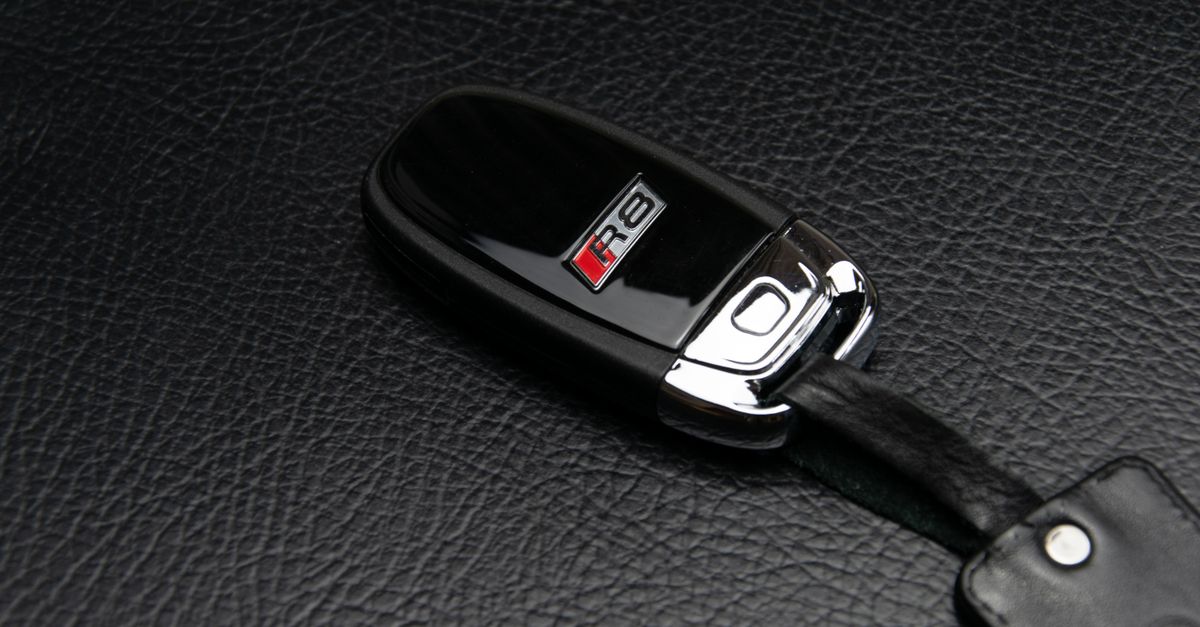
Why Audi Key Replacement Is More Involved Than Most Drivers Expect
Audi has phased in progressively complex key security across its lineup. Even models from the early 2000s use transponder chips embedded in the key head that must be electronically paired to the vehicle's immobilizer module before the engine will start. Later generations introduced flip-key fobs with rolling-code radio frequency functions, and more recent A4, A6, Q5, Q7, A3, and e-tron models use proximity smart keys that communicate with the car continuously — meaning simply cutting a blade to the right profile is only the first step of a two-step process. If the electronic pairing step is skipped or done incorrectly, you will have a key that fits the door lock but leaves the car completely unable to start. Our technicians carry professional-grade automotive programming equipment and Audi-specific key blanks, so both steps — cutting and programming — happen together, at your location, in a single visit.
A fob that has stopped unlocking the doors, a smart key that is not being recognized by the push-button start system, or a transponder key that cranks the engine but triggers the immobilizer are three very different failure modes that call for different diagnostic approaches. Our team distinguishes between a dead fob battery, a corrupted key code, a failed transponder chip, and a receiver antenna issue before recommending a solution. That diagnostic precision is what separates a professional outcome from a guessing game — and it is why we are able to provide an exact, up-front quote before any work begins.